
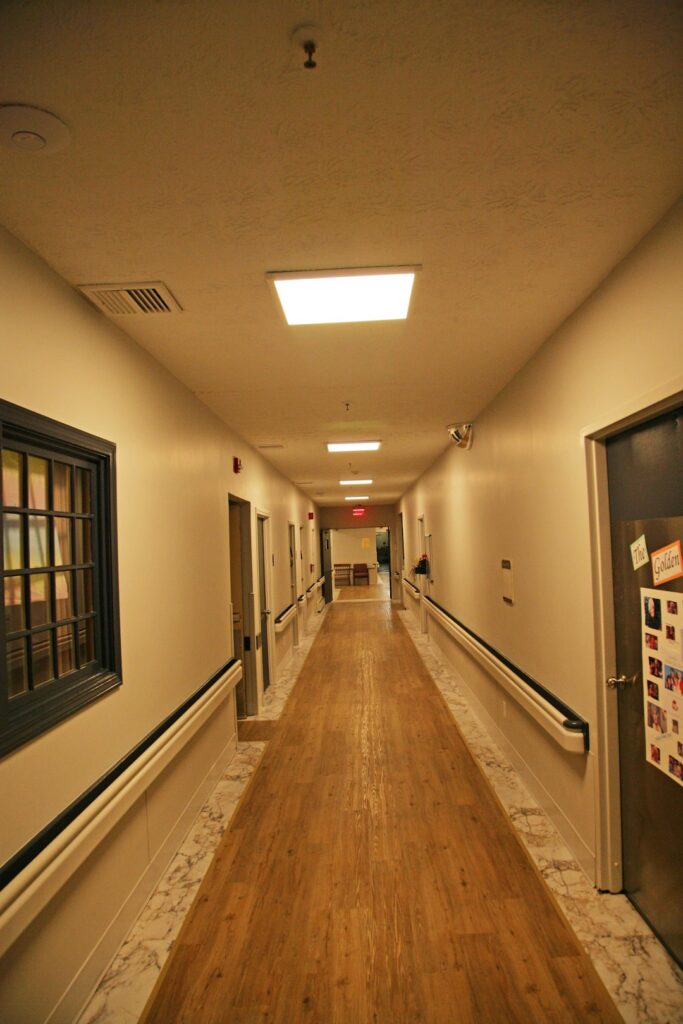
Assisted living safety is more than locked doors and emergency call buttons. A well-designed residence combines building features, trained staff, emergency planning, health protections, and daily routines that help residents remain as independent as possible while reducing preventable risks.
For families in Edwardsville, PA, understanding these features can make tours and care discussions more productive. The most useful question is not simply, “Is the building safe?” It is, “How does this residence identify risks, respond to emergencies, and adapt as a resident’s needs change?”
What safety features should an assisted living residence have?
A safe assisted living residence should address falls, fires, medical emergencies, wandering, medication problems, severe weather, utility failures, and changes in a resident’s mobility or memory.
Common safety features include:
- Emergency call systems in apartments and bathrooms
- Smoke detectors, fire alarms, fire extinguishers, and sprinkler systems where required
- Handrails in hallways and grab bars in bathrooms
- Non-slip flooring and adequate lighting
- Secure exterior doors and monitored access points
- Clearly marked exits and unobstructed hallways
- Backup power for essential systems
- Staff communication devices
- Procedures for responding to medical and behavioral emergencies
These features work best when staff regularly inspect them, respond promptly, and document problems. A call button that is difficult to reach or a hallway cluttered with equipment can create risk even if the residence has modern equipment.
How do assisted living communities prevent falls?
Fall prevention usually combines environmental design with individualized support. Residents may receive help with bathing, dressing, transfers, walking, or selecting appropriate footwear.
During a visit, look for:
- Bright, even lighting in hallways and bathrooms
- Night-lights or motion-activated lighting
- Floors that are level and free from loose rugs
- Furniture that is stable and easy to sit down on
- Grab bars near toilets and bathing areas
- Shower seating and handheld shower controls
- Call devices that can be reached from the floor
- Clear pathways for walkers and wheelchairs
A residence should also have a process for reviewing a fall after it occurs. Staff may examine whether the resident was ill, experiencing dizziness, taking a medication that increases fall risk, using an unsuitable mobility aid, or attempting an activity without needed assistance.
The goal is not to restrict every resident’s movement. Excessive restrictions can reduce strength, confidence, and quality of life. Effective safety planning balances supervision with independence.
How are fires and evacuations handled?
Fire safety depends on both building systems and staff readiness. Residents and families should ask how alarms are tested, how often evacuation drills occur, and how staff assist people who cannot walk independently.
Important considerations include:
- Multiple accessible exit routes
- Fire doors that close properly
- Clearly posted evacuation maps
- Staff assignments for assisting residents
- Procedures for residents who use wheelchairs, walkers, or oxygen
- A method for accounting for everyone during an evacuation
- Coordination with emergency responders
- Plans for relocation if the building cannot be occupied
Pennsylvania assisted living residences must meet state licensing requirements as well as applicable building and fire safety standards. However, compliance alone does not explain how a residence performs during a real emergency. Families should ask whether drills include overnight staffing and residents with significant mobility or memory limitations.
What happens during a power outage or severe weather event?
Weather planning deserves particular attention in northeastern Pennsylvania. Winter storms, freezing temperatures, heavy rain, icy walkways, and temporary power interruptions can affect transportation, heating, food service, medication storage, and communication.
A residence should have written procedures for:
- Maintaining heat and lighting
- Operating essential medical or safety equipment
- Providing food and drinking water
- Keeping medications secure and available
- Communicating with families
- Managing transportation disruptions
- Checking residents who are isolated in their apartments
- Responding if a building must be partially or fully evacuated
Ask how long backup power can support essential systems and which systems are included. A backup generator may support alarms, elevators, heating equipment, refrigerators, or selected outlets, but not necessarily every electrical device in a resident’s apartment.
Emergency plans should also address communication failures. Families can ask how updates are provided if phone, internet, or cellular service is interrupted.
How are wandering and memory-related risks managed?
Residents with dementia or other cognitive changes may leave an area without understanding the danger. Safety measures should protect residents without treating every person as though they lack decision-making ability.

Possible safeguards include:
- Secured entrances and exits
- Door alarms or monitoring systems
- Familiar layouts and visible room labels
- Staff awareness of individual routines
- Safe outdoor areas
- Identification procedures for residents who may become lost
- Personalized approaches to redirection
A secured environment should still feel residential rather than institutional. Families should ask how a residence decides when a person needs additional supervision and how that decision is reviewed over time.
How are medication and medical emergencies addressed?
Assisted living does not provide the same level of medical care as a hospital or skilled nursing setting. Residents and families need to understand what staff can do, what requires outside medical services, and how emergencies are escalated.
Questions worth asking include:
- Who assists with medication reminders or administration?
- How are missed or refused medications documented?
- How are medication changes communicated?
- What happens if a resident falls, becomes confused, or has trouble breathing?
- How are emergency contacts reached?
- How are hospital transfers and return instructions handled?
- How are allergies and special dietary needs recorded?
A reliable system includes clear documentation, timely communication, and follow-up after an emergency. Families should also understand whether residents may keep medications in their apartments or whether medications are managed by staff.
What role does staffing play in resident safety?
Safety features only work when enough trained staff are present and able to respond. Staffing needs may differ during mornings, evenings, overnight hours, weekends, and holidays.
During a tour, ask:
- How many staff members are typically present on each shift?
- Who responds to emergency call devices?
- Are staff trained in first aid, emergency procedures, and safe transfers?
- How are new staff oriented to a resident’s needs?
- What happens when an employee is absent?
- Are overnight staff awake and available?
Observe whether staff know residents by name, respond respectfully, and notice changes in behavior or mobility. A calm, attentive approach is a practical safety feature because it can identify problems before they become emergencies.
What should families look for during a tour?
A tour provides useful information beyond the formal safety checklist. Notice whether hallways are clean and uncluttered, whether bathrooms are easy to enter, and whether residents appear able to move through shared spaces comfortably.
Ask to see an actual apartment bathroom, an emergency call device, common exits, and outdoor areas if available. Listen for direct answers rather than general assurances.
Families in Edwardsville should also ask how the residence prepares for icy conditions, heating problems, transportation delays, and interruptions in local services. These issues may affect daily safety even when there is no major disaster.
Safety is strongest when the building, staff, emergency plans, and resident-specific care approach all work together. A residence should be able to explain these systems clearly and show how they are reviewed as residents’ needs change.
